

Notes on Flourishing
From fields of gold (and purple and cream and orange and pink)

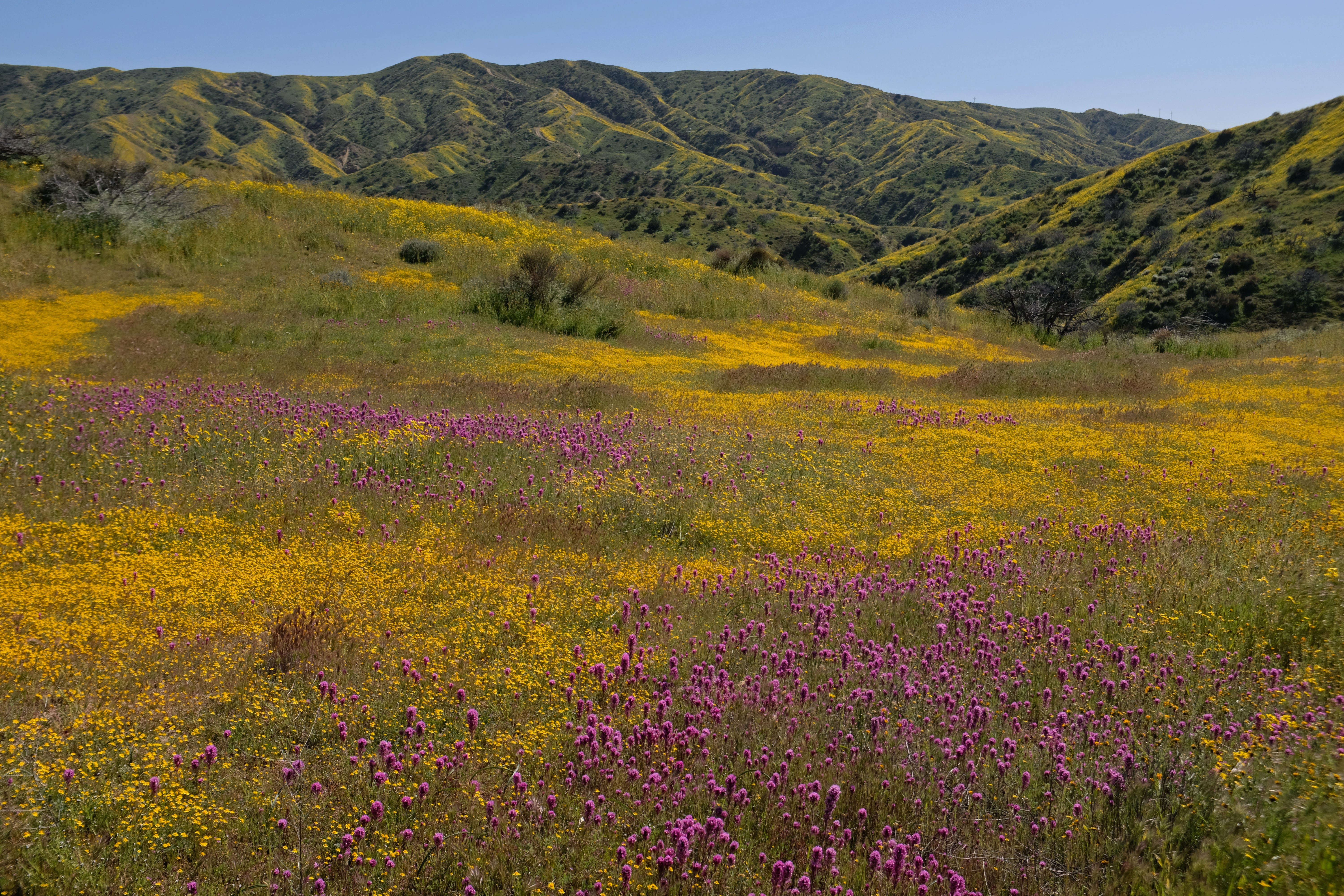
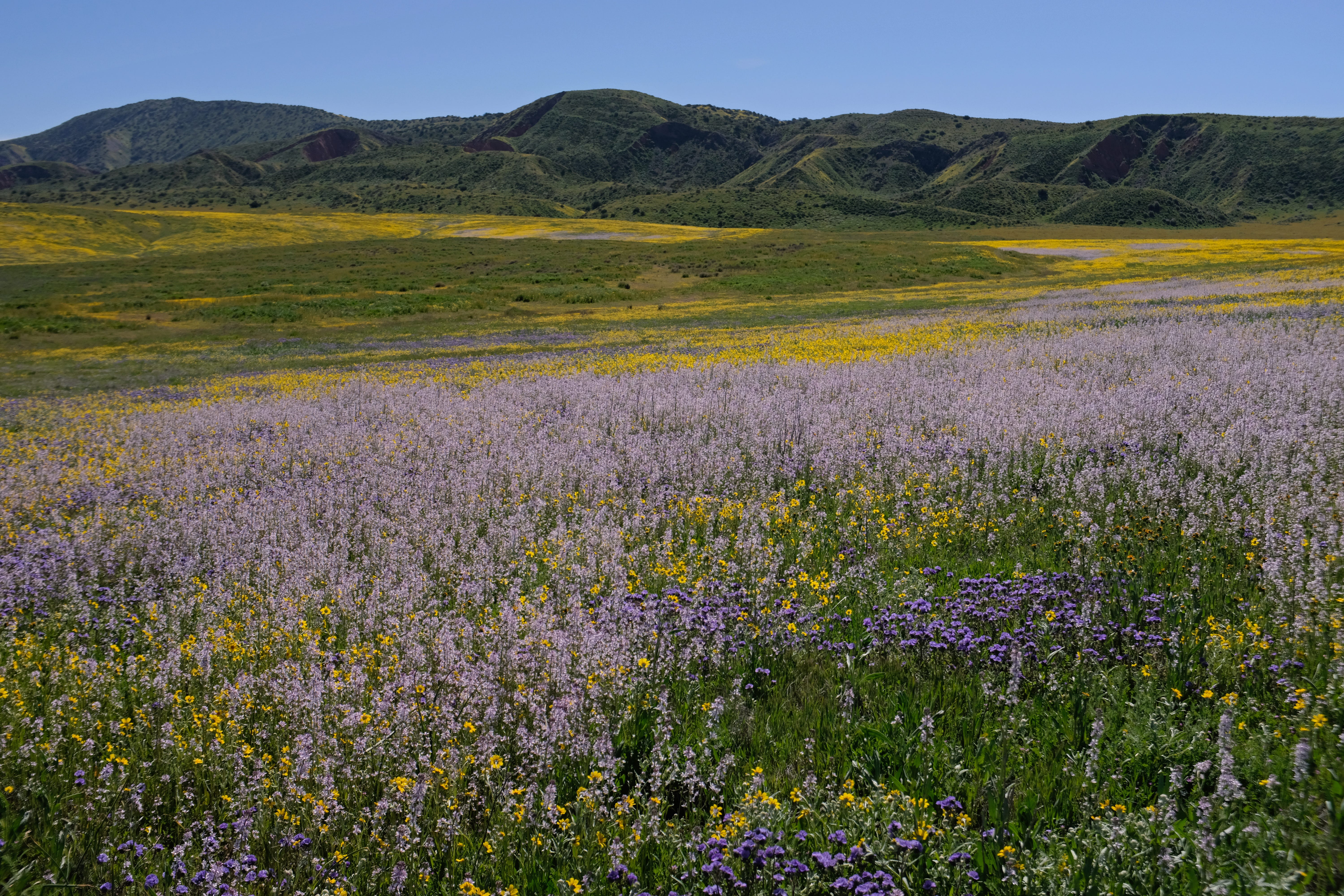
How many millions of goldfields will bloom in Carrizo Plain this season? The number seems nearly incalculable, like trying to count all of the stars. Each yellow blossom, a centimeter or so in diameter, is not a single flower but a flowerhead containing several dozen individual flowers, arrayed as discs spiraling from a center and rays fanning out from there. Multiply this by miles of fields and hills in dense golden bloom, and the number edges toward imaginary, toward infinite.
We follow animal trails through low golden thickets, across loose rocky hillsides surrounded by nothing but yellow, the countless flowers glowing like living light and moving as one with the wind. Alone, a single goldfield has undetectable fragrance, but moving through fields of them, an earthy-sweet scent stirs and swirls in the air, clings to me like their dusty golden pollen clings to my boots and pants.
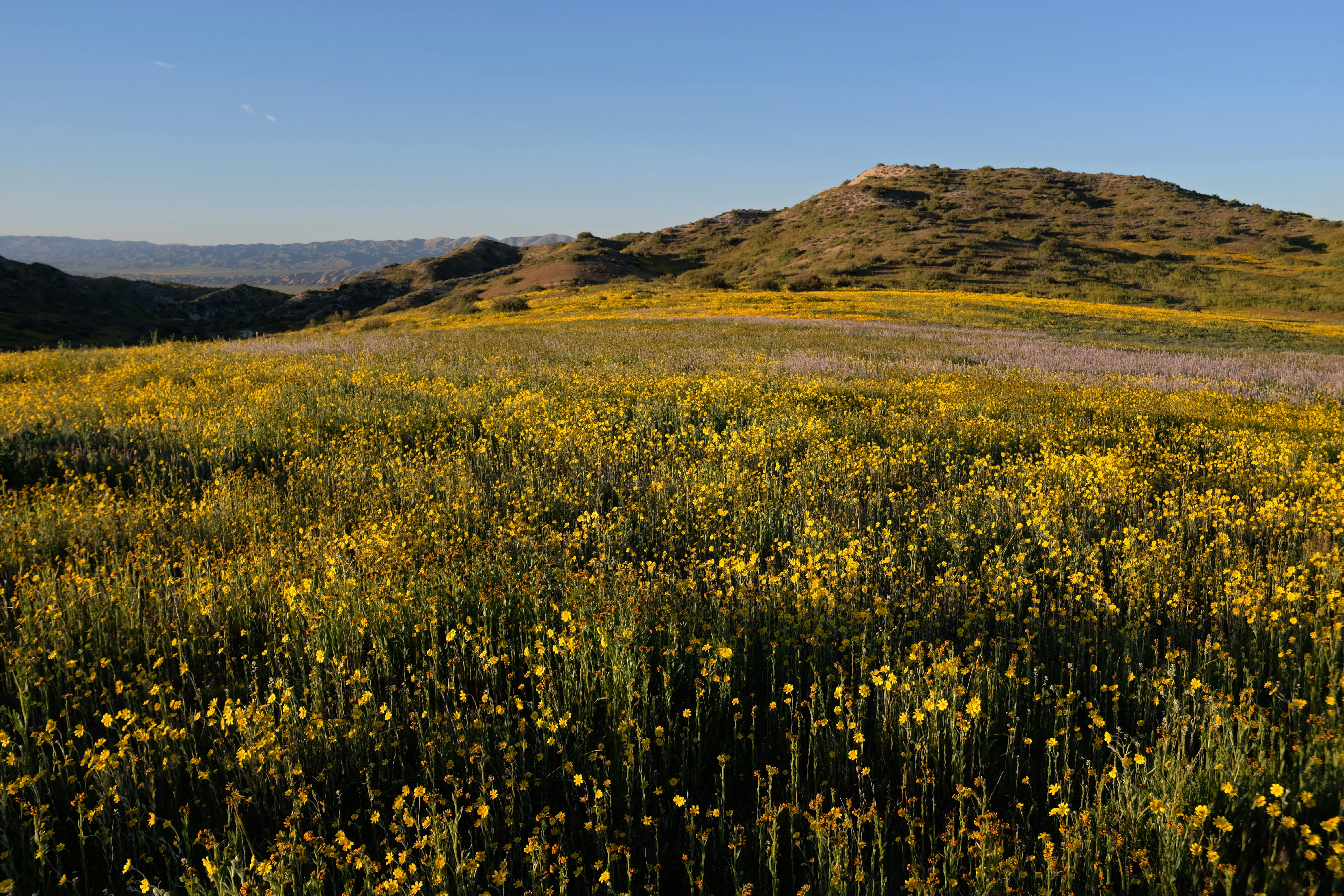
Gold of Lasthenia californica, lemon of Monolopia lanceolata, saffron of Leptosyne californica—the valley’s many yellows are seared into my psyche. I see yellow when I close my eyes; when I sleep. Yellow again at dawn when I emerge from my tent, stretching across the hills bathed in a day’s new light. Yellow follows me around all day, like the flowers’ faces tracing the sun across the sky. Yellow—the earth endlessly praising the sun right back.
Heliotrope purple Phacelias and magenta owl’s clovers (Castilleja exserta) are common enough, but amid the yellow sea they seem nearly as precious as the rare California jewelflowers (Caulanthus californicus), which grow proud and tall with stalks of burgundy blooms. Some of the most abundant plants spreading their colors across this valley and the mountains surrounding it are endemic to this land; some are highly rare and endangered, though you wouldn’t know it by their numbers here.
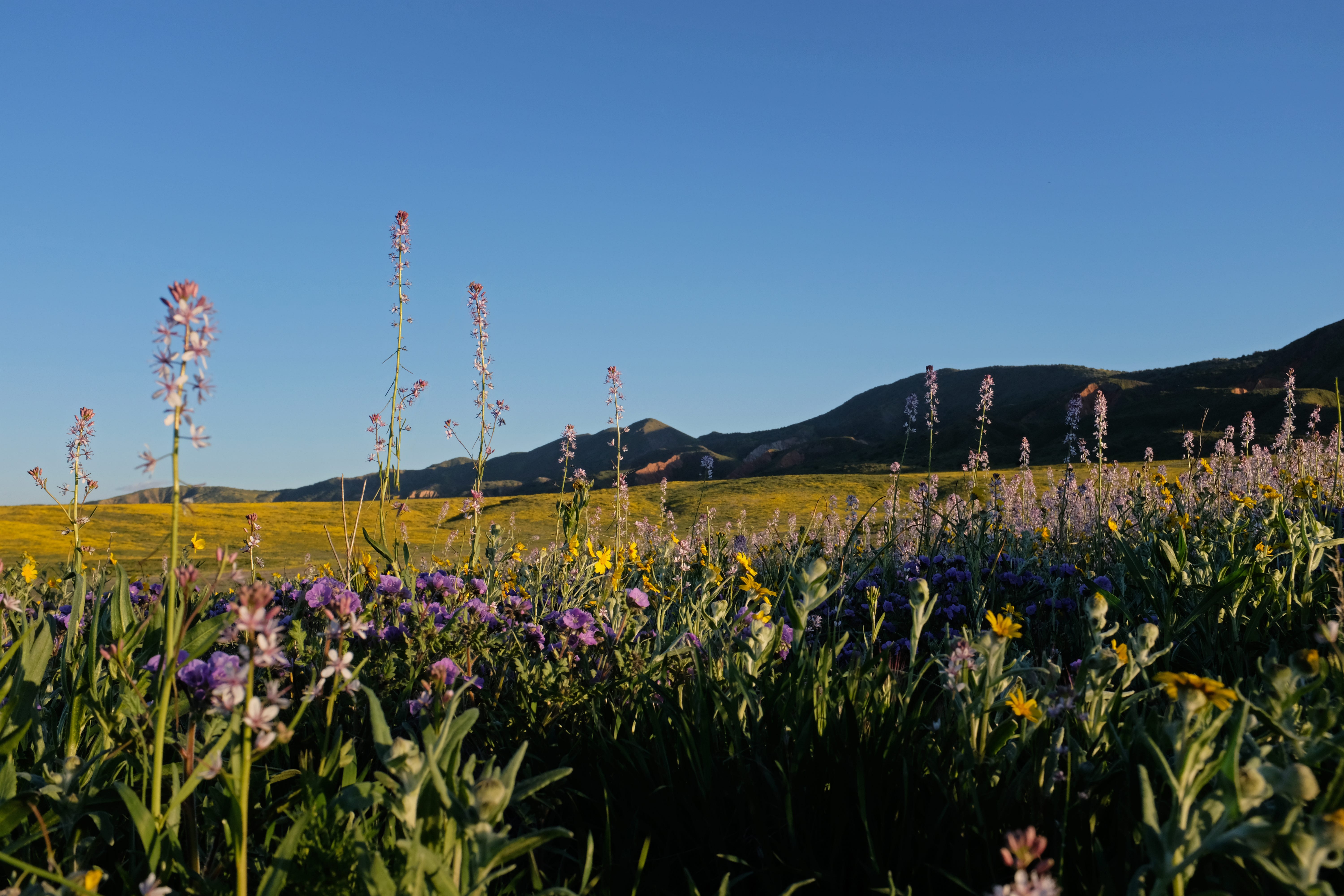
You could mistake Munz’s tidytips (Layia munzii) for yet another common yellow bloom, but they are found only in a small portion of central California, their populations threatened and their viable homeland reduced by encroaching agriculture. Fiery orange-and-red San Joaquin blazingstars (Mentzelia pectinata) emerge in burn scars—and few other places—in great numbers, and Delphinium recurvatum, with their claw-shaped lavender flowers, grow just off-trail, just outside the parking lot, seeming commonplace despite being not at all common.
The rare plants have an air of defiance, amplified by their abundance. This is their land. They learned how to live here, to wait out drought years or to opportunistically sprout after fire—adaptations honed over countless generations. In only a handful of human generations, we’ve come to threaten them with how we choose to use the land. My land, some folks think, but really, it’s all of ours. As much the common goldfield’s and the rare jewelflower’s, both of whom have learned to flourish here. Among countless invasive grasses, grazing cows, cars, and tourists, against all odds, they claim what is theirs for another season.
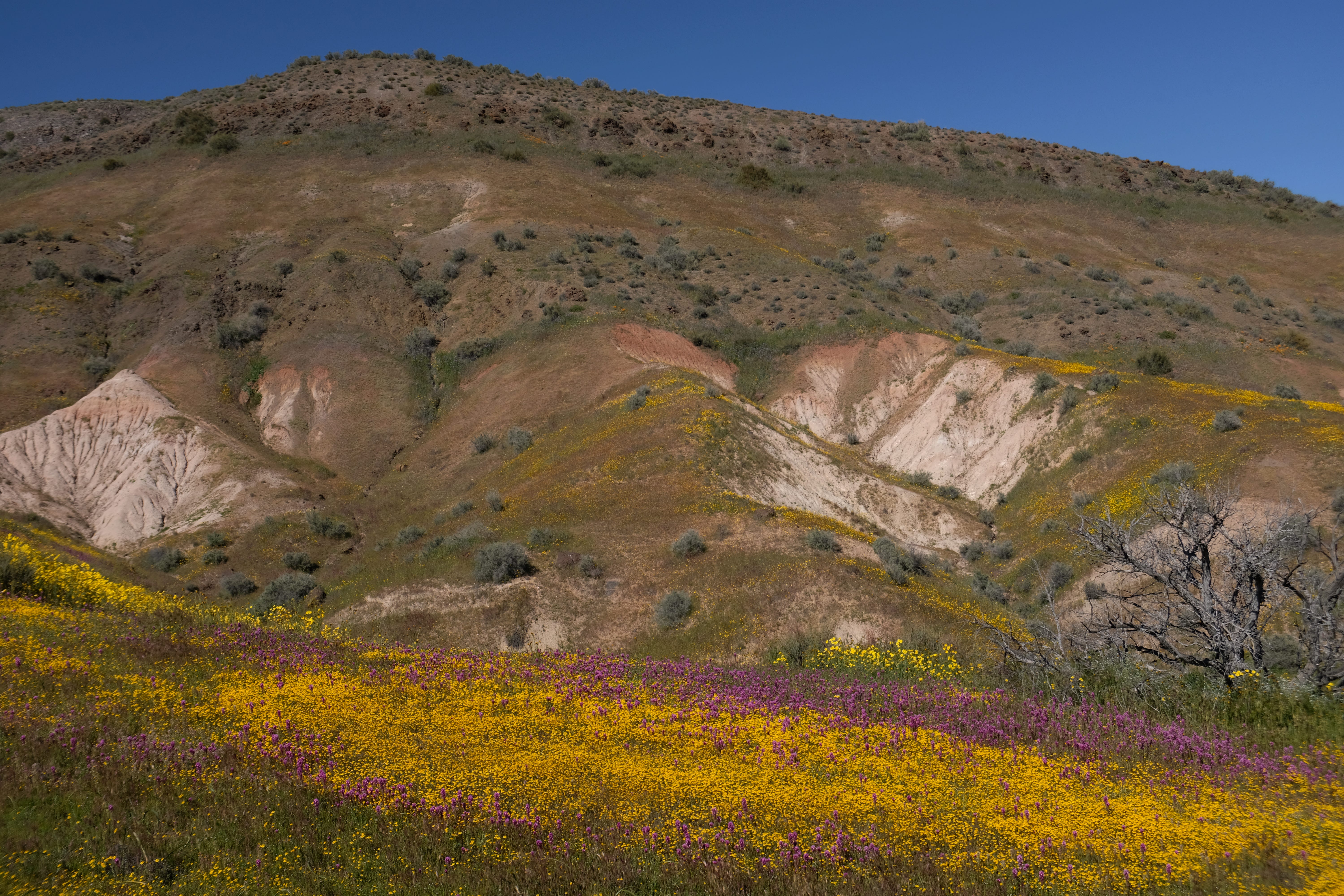
Crouching down to the Linanthus’ level, its nocturnal flowers withdrawn into a tight spiral of white petals, I understand the urge to seek shelter from the harshness of this world. The creamcups (Platystemon californicus) furl up in the afternoon, too, their many anthers enclosed in tiny pods of cream and gold, having allowed the fairy moths and flies their fill of nectar, just for the morning. Their openness is brief and tenuous; the flowers also close to the cold, to the rain. How long have they perfected this form of self-protection, so they may grow in such abundance, covering open grasslands—what few are left—from Baja California to Oregon?
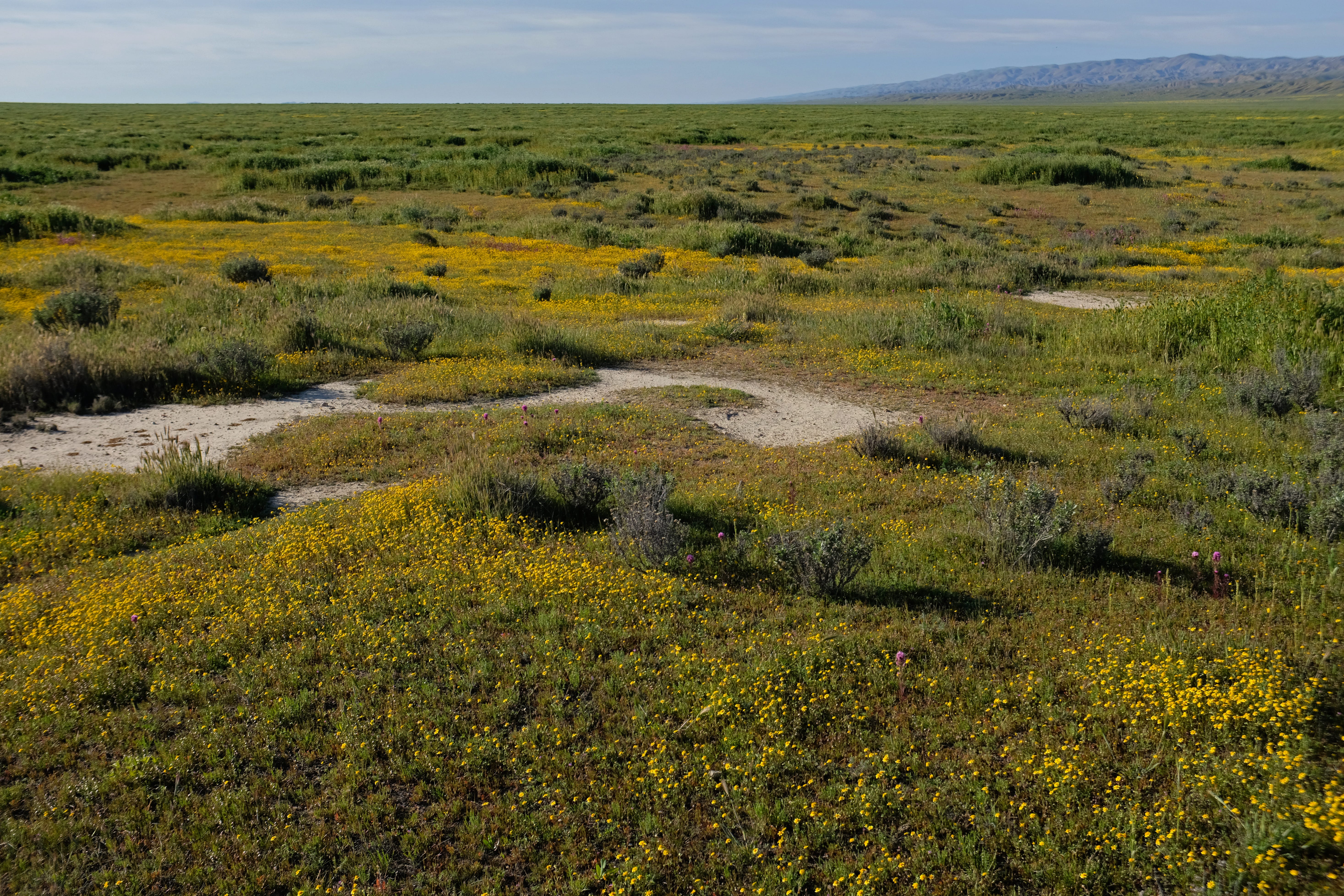
May we all be lucky enough to grow (and adapt, and evolve) as we’re meant to. The right conditions are hard to come by, in these times tainted by a changing climate, and with our modern lives colored by so much disconnection. Maybe the tourists who flock here with their cameras are drawn to a place in full flower because they are hungry to witness a world exactly as it is meant to be. Alive with potential and nourishment—a giant garden of edible bulbs and seeds and greens and flowers—and full of flourishing life. Their photographs are evidence: this is possible, for all of us.
Kneeling in waist-high grass at the edge of a field of Great Valley Phacelia (Phacelia ciliata)—scented somehow just like its vibrant, heady purple—I find myself drawn lower and lower, finally laying down on the soft green earth, submitting to the wisdom of flowers in their fullest state of being. My companions—two professional botanists, a fellow plant lover, and a toddler—all know the flourishing feeling, and we follow it relentlessly. We rest in our beds of grass at the purple sea’s edge, merging for a time with the land, utterly alive, and sensing all the possibility of a world fully in flower.
Thank you for reading Tinctoria, the newsletter from me, Erin of Berbo Studio.
I’m happy to announce my next workshop, on Saturday, May 23rd at California Botanic Garden: Natural Dyes of the San Gabriel Foothills.
"Maybe the tourists who flock here with their cameras are drawn to a place in full flower because they are hungry to witness a world exactly as it is meant to be."
Beautifully put.